
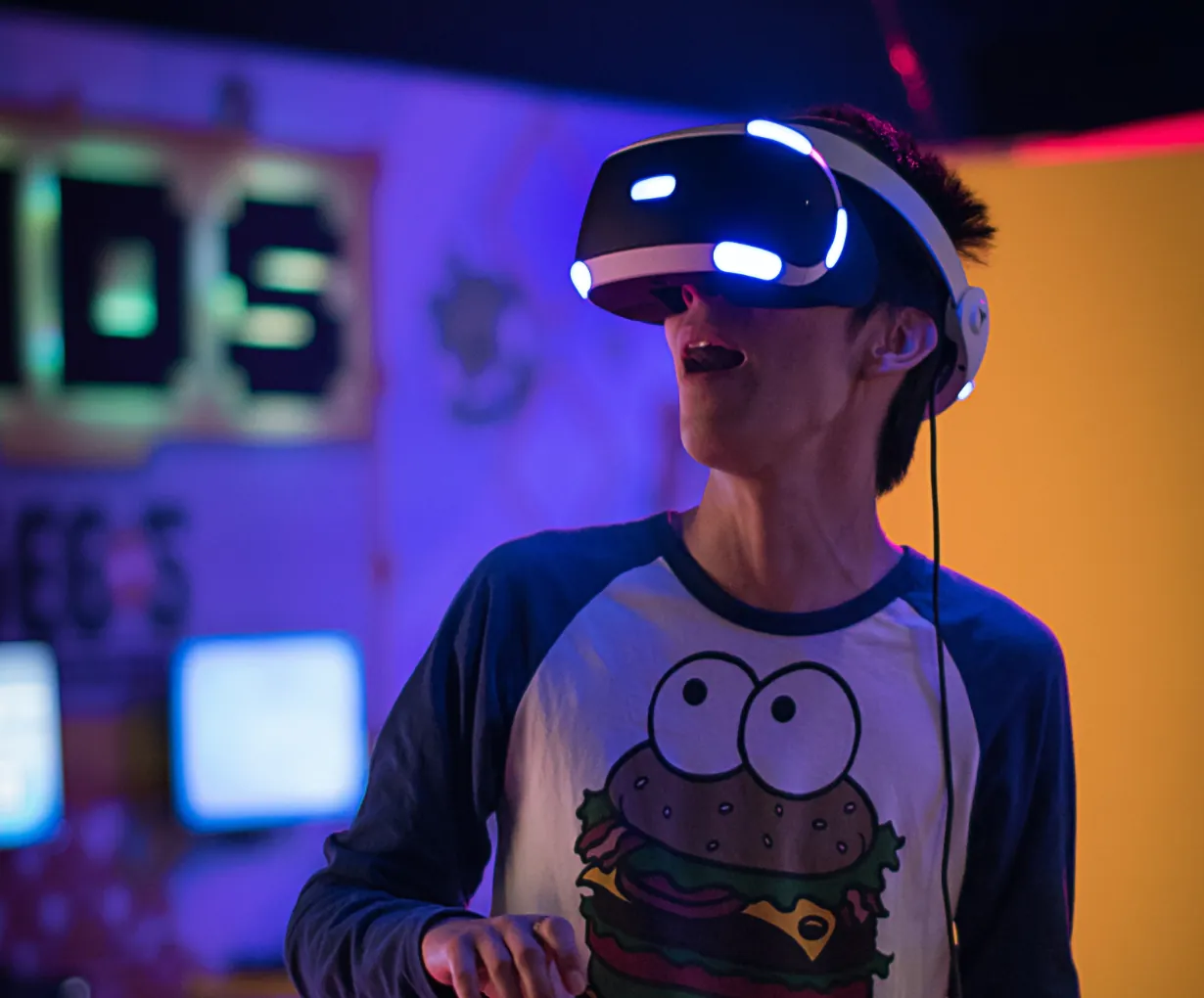

Virtual Reality (VR) has emerged as one of the most groundbreaking technologies of the modern era, transforming the way we interact with the digital world. From gaming and entertainment to education, healthcare, and business, VR is unlocking new possibilities, allowing users to immerse themselves in entirely new environments where the limits of reality no longer apply.
What is Virtual Reality?
Virtual Reality (VR) is a computer-generated environment that simulates a realistic or imaginary world, allowing users to experience and interact with it through VR headsets, headphones, and motion controllers. VR creates a sense of presence by engaging the user’s senses, including sight, sound, and touch, to make the experience feel as real as possible.
How Virtual Reality Works
VR technology operates through several key components:
- 3D Visual Display – VR headsets project high-resolution 3D images, creating depth and spatial awareness for an immersive experience.
- Motion Tracking – Sensors track head and body movements, allowing users to explore and interact with the virtual environment in real-time.
- Spatial Audio – 3D audio technology creates directional sound, making the experience more realistic and enhancing the sense of presence.
- Physical Interaction – Hand controllers and haptic feedback devices allow users to touch, hold, and manipulate objects in the virtual world.
Applications of Virtual Reality
Gaming
The gaming industry has been one of the biggest beneficiaries of VR technology. Games like Half-Life: Alyx and Beat Saber offer highly immersive experiences where players can physically interact with the game environment, adding a new layer of engagement and excitement.
Entertainment
VR is transforming the way we consume media. From 360-degree movies to virtual concerts, users can now feel like they are part of the action. VR also allows virtual tourism, enabling users to visit iconic landmarks and exotic locations from the comfort of their homes.
Healthcare
In the medical field, VR is used for surgical training, physical therapy, and mental health treatment. VR simulations allow doctors to practice complex procedures, while exposure therapy in VR helps patients manage anxiety and phobias in a controlled environment.
Business and Training
Companies are adopting VR for employee training, virtual meetings, and product development. VR enables realistic training simulations and collaborative workspaces where teams can meet and interact as if they were physically present.
Education
VR is enhancing learning by providing interactive and immersive experiences. Students can explore the solar system, visit historical landmarks, or conduct virtual science experiments, making learning more engaging and memorable.
Advantages of Virtual Reality
- Immersive Experience – VR engages multiple senses, creating a realistic and engaging environment.
- Natural Interaction – Motion tracking and haptic feedback make interactions in the virtual world intuitive and lifelike.
- Enhanced Creativity – VR provides a limitless space for creative exploration and experimentation.
- Wide Range of Applications – VR’s versatility makes it valuable across industries, from entertainment to healthcare.
The Future of Virtual Reality
VR technology continues to evolve rapidly, with devices like the Meta Quest 3, PlayStation VR2, and HTC Vive Pro pushing the boundaries of performance and user experience. Future advancements in VR are expected to include more realistic graphics, improved motion tracking, and enhanced sensory feedback, making virtual experiences even more lifelike.
Virtual Reality is no longer a futuristic concept – it is here, and it is transforming how we work, play, and connect with the world. The future of VR promises deeper immersion, more intuitive interaction, and endless creative possibilities.
Experience the future of digital reality – Virtual Reality is just getting started.